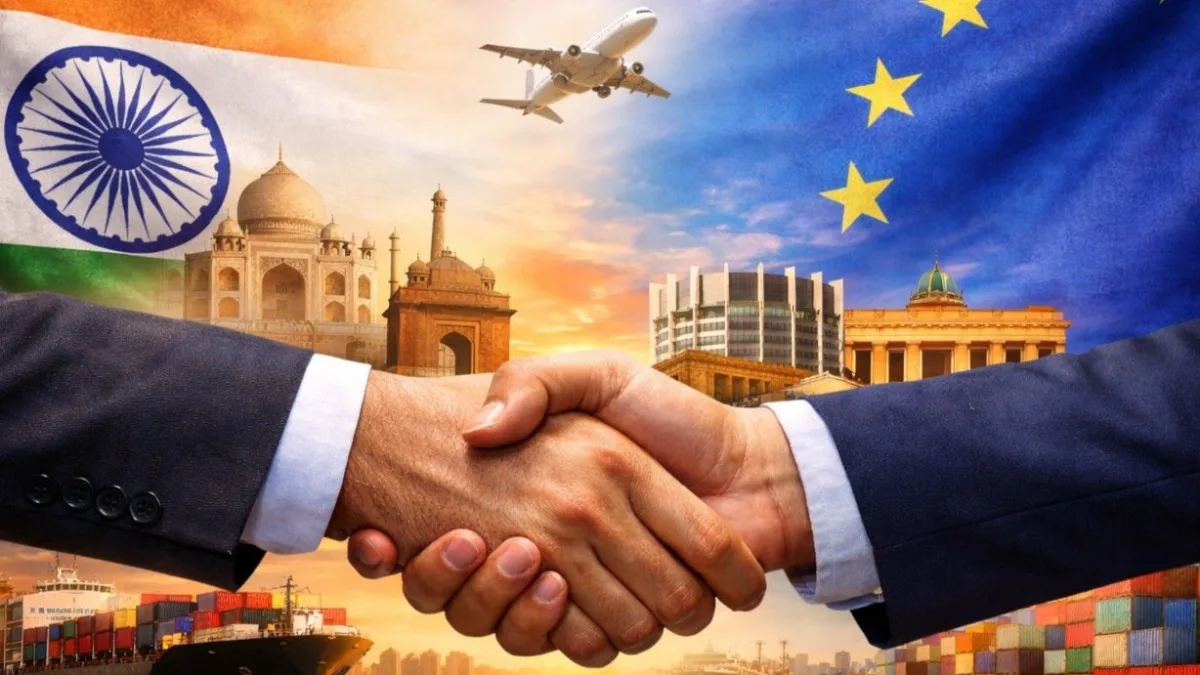
In January 2026, the world witnessed a watershed moment in global economic and strategic relations as India and the European Union (EU) moved to finalize a historic Free Trade Agreement (FTA) after nearly two decades of discussions and negotiations. This landmark development, cemented during the 16th India‑EU Summit in New Delhi, marks a new chapter in international trade, geopolitics, and strategic cooperation. The deal often described by officials as the “mother of all trade deals” reflects both partner's shared desire to deepen economic ties, diversify trade, and strengthen global influence.

The Road to an Historic Trade Deal
Talks between India and the European Union on a comprehensive trade agreement began in 2007, but progress was slow and stalled around 2013 due to disagreements on market access and regulatory issues. After renewed efforts in the early 2020s, both sides reached a breakthrough in late 2025 and early 2026, culminating in the conclusion of negotiations set to be officially announced at the summit in January 2026. The successful wrap‑up of these negotiations signals a major diplomatic and economic achievement for both sides.
Key Features of the India‑EU FTA
The trade agreement aims to substantially reduce or eliminate tariffs on a wide range of goods between India and the EU covering sectors such as textiles, footwear, cars, wines, and other labour‑intensive products. European automakers, for example, are set to benefit from significant tariff cuts on cars, with duties on certain vehicles likely reduced significantly over a defined period.
Under the pact, India will gradually reduce its historically high import tariffs (often exceeding 100% on cars) to more competitive levels a shift that could open up the Indian market to brands such as Volkswagen, Mercedes‑Benz, and BMW. Meanwhile, Indian exporters stand to benefit from improved access to the massive EU market, potentially boosting exports in sectors such as pharmaceuticals, machinery, and textiles.

Deepening Strategic Cooperation Beyond Trade
In addition to economic arrangements, India and the EU are advancing strategic cooperation in security and defence. Both sides are moving toward a security‑partnership framework covering maritime security, cybersecurity, counterterrorism, and defence industrial cooperation. These initiatives are aimed at enhancing joint responses to shared security challenges and strengthening strategic alignment in the Indo‑Pacific and beyond.
Such cooperation reflects the broadening scope of the India‑EU relationship, which now spans trade, technology, climate action, and security making it a multidimensional strategic partnership rather than a purely commercial arrangement.
Boosting Economic Ties and Jobs
The India‑EU FTA is expected to significantly increase bilateral trade, with potential to unlock additional export growth and investment flows. The EU is already one of India’s top trading partners, with bilateral trade reaching approximately $136 billion in 2024‑25. Indian services exports to the EU have grown steadily in recent years, while the EU’s goods exports to India include machinery, transport equipment, and chemicals.
This trade expansion could generate jobs, attract foreign investment, and strengthen India’s position in global supply chains. For young professionals, the pact also opens pathways for greater mobility and employment opportunities across EU member states, further integrating the two economies.
Geopolitical Importance
The timing of this agreement is highly significant. With global trade patterns shifting due to geopolitical tensions and tariff policies imposed by major economies, both India and the EU have sought to diversify partnerships and reduce reliance on any single market. This FTA sends a strong signal of cooperation in the face of protectionist pressures and trade realignments drawing reactions from other global powers as they reassess economic and diplomatic strategies.
By solidifying ties with India, the EU also strengthens its presence in the Indo‑Pacific region, supporting shared interests in open trade, rules‑based international order, and regional security cooperation.
Challenges and Next Steps
Despite the breakthrough, the agreement must still undergo legal review and ratification by both parties including approval by the European Parliament and India’s domestic processes before it can be fully implemented. Certain sensitive areas will require ongoing negotiations, particularly where regulatory standards (like carbon border adjustments) could impact trade flows.
Moreover, both sides will need to manage domestic industries’ expectations and ensure that the benefits of the agreement are widely shared across sectors and communities.
Symbolism and Diplomacy at Republic Day
The India‑EU Summit coincided with India’s Republic Day celebrations, where EU leaders were invited as chief guests. This unparalleled diplomatic gesture including the participation of an EU military contingent in India’s parade highlighted the deepening friendship and strategic alignment between the two.

Conclusion: A New Era of Partnership
The India‑EU Free Trade Agreement, along with expanded strategic cooperation, represents a transformative moment in international relations. By breaking long‑standing barriers and aligning economic and strategic interests, both India and the European Union have charted a course toward deeper collaboration. This partnership is poised to boost growth, strengthen global trade links, and reshape the economic and geopolitical landscape in the years to come.

Comments (0)
Join the conversation
No comments yet. Be the first to share your thoughts!