The landscape of academic and scientific research is evolving rapidly, and at the center of this transformation is OpenAI Prism a cutting-edge AI-native workspace tailored for researchers, scientists, and technical writers. Unlike traditional writing tools, Prism integrates AI directly into the writing process, making it a truly collaborative and context-aware environment for producing high-quality scientific documents. Here's a deep dive into how OpenAI Prism sets a new benchmark for research writing, and why it's making waves across academia.
What Is OpenAI Prism?
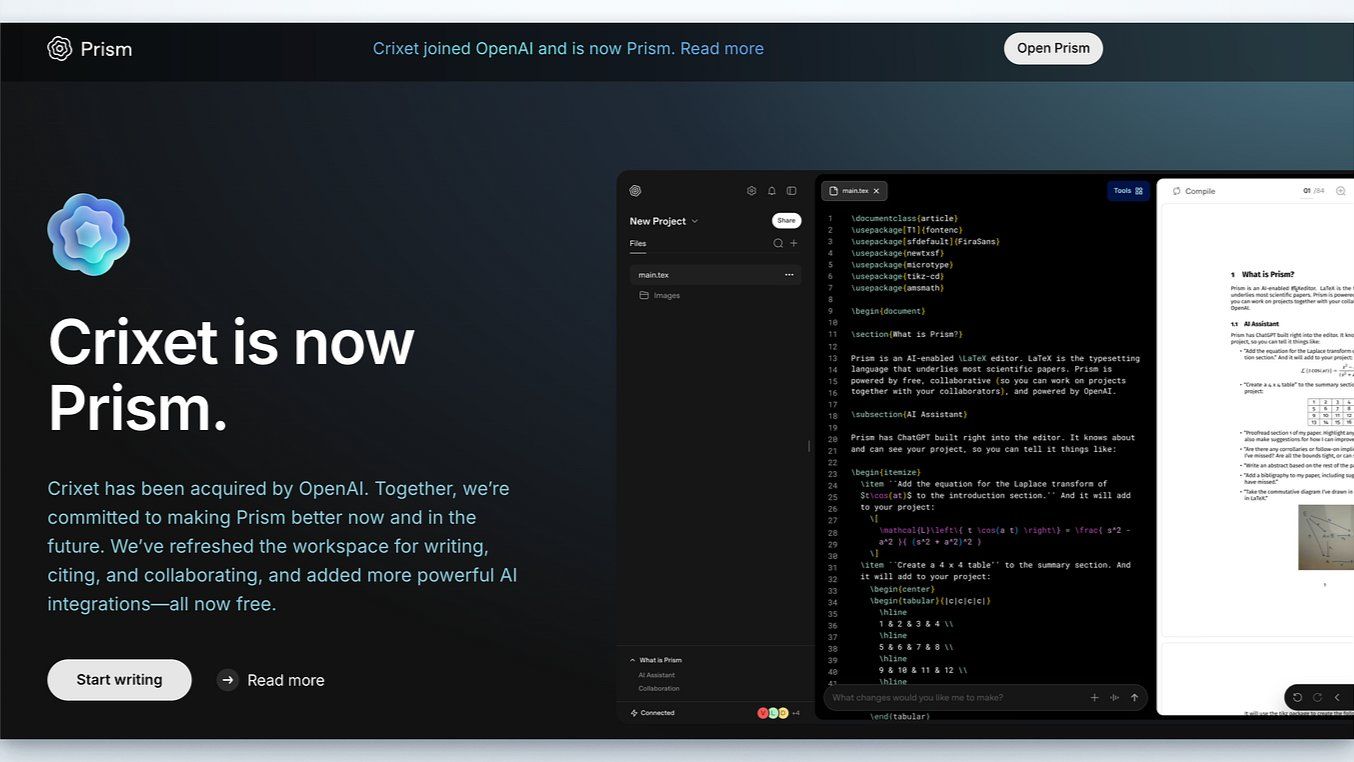
OpenAI Prism is a free, LaTeX-native, cloud-based scientific writing platform powered by GPT-5.2, the latest in OpenAI’s advanced language models. It’s designed specifically to support the drafting, revising, and structuring of complex scientific and technical documents. What makes Prism revolutionary is that the AI is embedded directly into the editor, offering context-aware assistance as you write, not after.
Why Prism Stands Out from the Crowd
While there are many AI writing tools available, Prism is purpose-built for scientific accuracy, academic collaboration, and technical depth. Here’s how it differs:
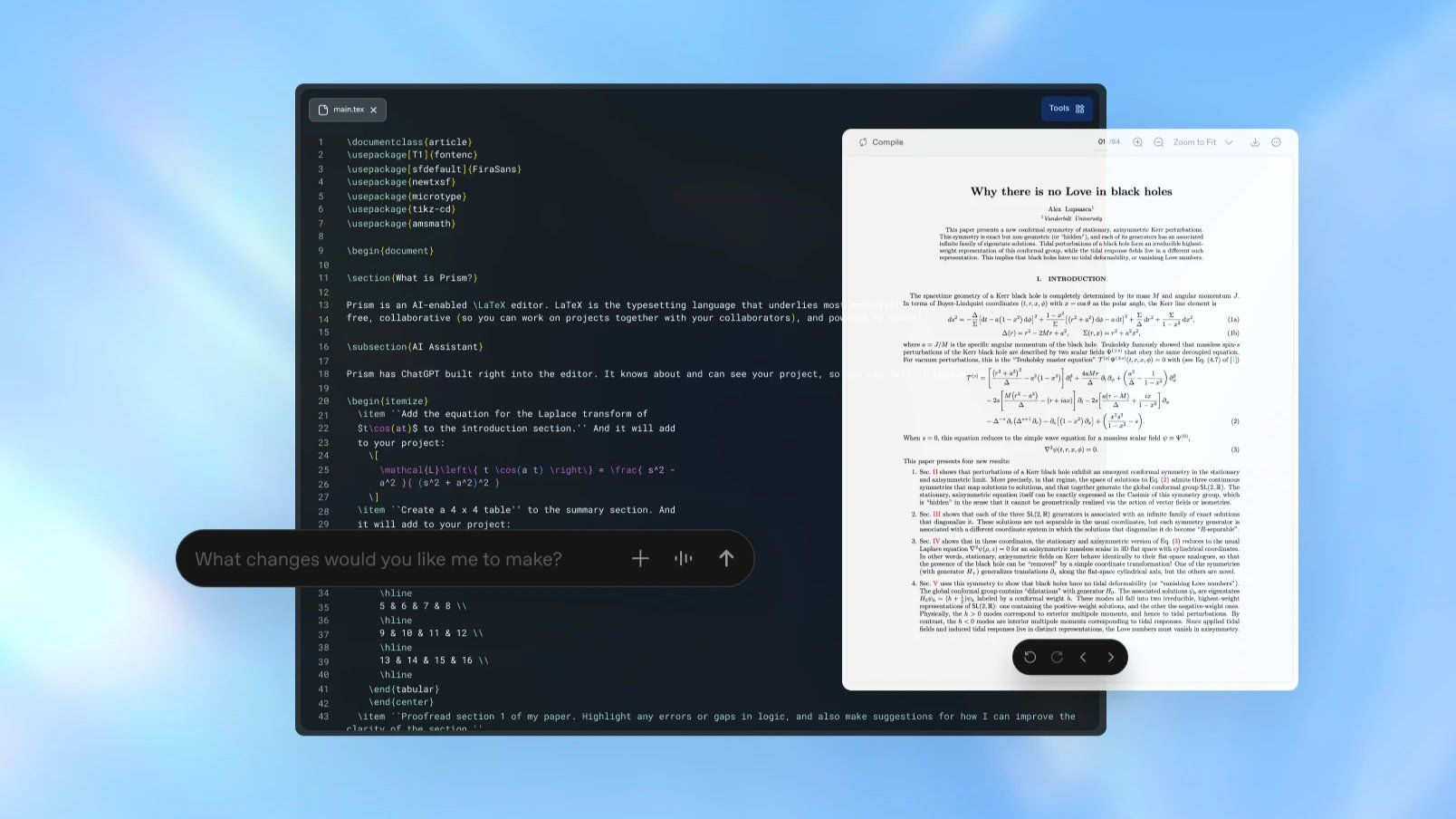
- In-line GPT-5.2 Assistance: AI is part of the document not a separate chatbot.
- LaTeX-Native Support: Seamlessly write mathematical equations and scientific notation.
- Real-Time Collaboration: Work with co-authors live, with comments and suggestion tracking.
- Research-Focused Templates: Structured sections for Abstract, Methods, Results, etc.
- Contextual Intelligence: Prism understands citations, graphs, references, and equations.
Key Features for Researchers
Researchers face immense pressure to communicate complex ideas clearly, accurately, and efficiently. OpenAI Prism directly addresses this need through:
1. AI-Powered Drafting
Generate coherent sections like introductions, claims, and abstracts from data points or bullet notes. It reduces writer’s block and accelerates publication timelines.
2. Scientific Language & Rewriting
Refine your academic tone with AI suggestions tailored to scientific discourse. Rewrite paragraphs for clarity, compress long explanations, or enhance technical vocabulary effortlessly.
3. Built-in LaTeX & Equation Handling
Whether you’re writing complex physics equations or formatting detailed results, Prism’s native LaTeX support ensures smooth, error-free rendering without external editors.
4. Intelligent Citations & References
AI can suggest citations, place references contextually, and help with citation styles perfect for literature reviews or method validation.
Benefits for Scientific Writers and Students
For students, early-career researchers, and technical writers, Prism provides invaluable support by simplifying complex workflows:
- Generate Structured Drafts: Turn ideas or rough outlines into structured papers.
- Collaborate with Ease: Share your paper with a supervisor, peer, or team and work in real time.
- Academic Polish: Prism helps ensure your writing is publication-ready with AI-enhanced grammar, clarity, and formatting.
Use Cases Across Academia and Industry
- PhD candidates preparing dissertations and journal papers
- Postdocs streamlining research drafts for peer-reviewed submissions
- Technical institutes producing white papers and internal reports
- Research collaborations across universities and labs
- STEM students writing lab reports and capstone projects
Conclusion: A New Era of Scientific Writing
OpenAI Prism isn't just another AI writing tool it’s a transformative workspace that brings together scientific structure, AI reasoning, and collaborative power in one place. For researchers, students, and scientific writers, it reduces friction in the writing process, boosts output quality, and frees up time to focus on what truly matters: the research itself.
As the academic world continues to demand faster, clearer, and more impactful writing, Prism positions itself as an essential tool for the future of scholarly communication.
FAQs
1.What makes OpenAI Prism better than other tools like Grammarly or Overleaf?
Prism integrates GPT-5.2 directly into the LaTeX-native editor, allowing real-time suggestions, scientific context-awareness, and structured research templates all in one platform.
2.Is OpenAI Prism free to use?
Yes, OpenAI currently offers Prism for free to users with a ChatGPT account.
3.Can I collaborate with others in Prism?
Absolutely. Prism supports real-time co-authoring, commenting, and change tracking, making it ideal for academic teams.
4.Does Prism support citations and references?
Yes. Prism understands where and how to place references, and even suggests them contextually based on your content.
5.Can it be used for subjects outside science and engineering?
While optimized for technical writing, Prism can also support structured writing in social sciences, economics, and interdisciplinary research.



Comments (0)
Join the conversation
No comments yet. Be the first to share your thoughts!