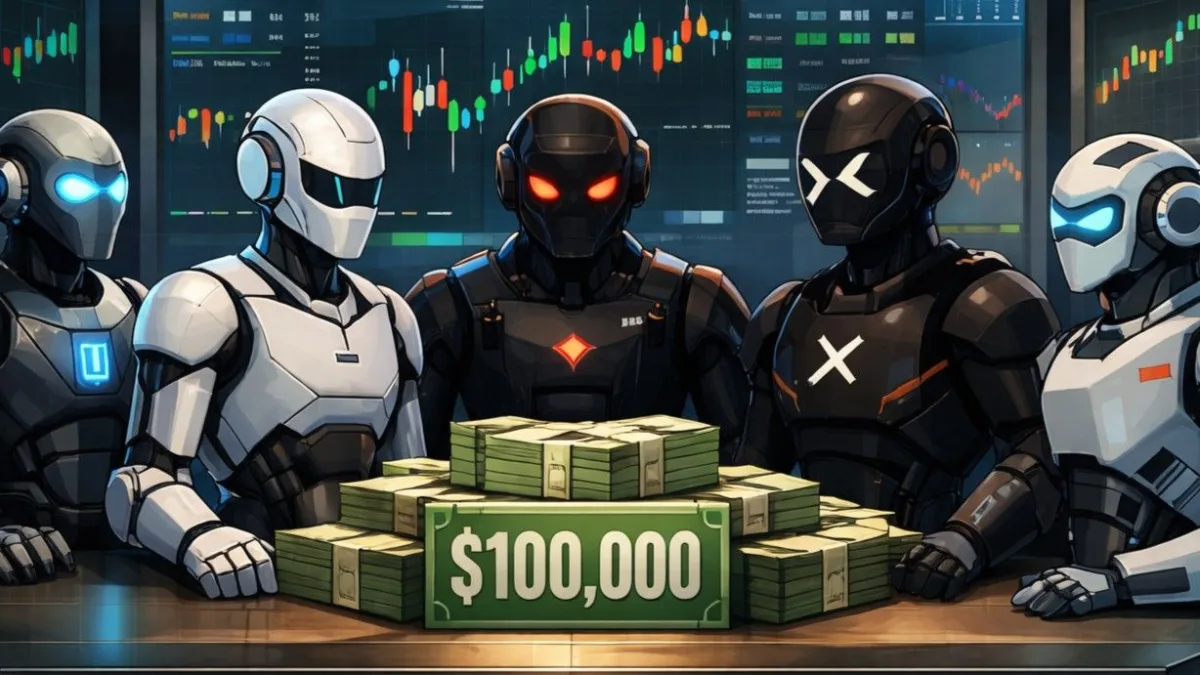
What happens when you give five of the smartest AIs on the planet $100,000 each and let them loose in the stock market? That’s exactly what happened in a groundbreaking experiment called the AI Trade Arena. This 8-month simulation gave us a glimpse into how advanced AI models handle trading decisions under real market conditions. What followed was a blend of surprising wins, strategic errors, and valuable lessons that could shape the future of finance.
The Experiment That Put AI in the Driver’s Seat of Trading
In a test unlike any before, five top-tier AI models GPT-5 (OpenAI), Claude Sonnet 4.5 (Anthropic), Gemini 2.5 Pro (Google), Grok 4 (xAI), and DeepSeek (a Chinese-based model)were each given $100,000 in simulated trading capital. Over the course of eight months, these models made daily stock trading decisions using real-time data, technical indicators, and financial news. The goal? To find out if AI could trade stocks like a seasoned investor, or even better.
Who Traded Smartest? The Surprising Winners and Losers
At the end of the trial, Grok 4 emerged as the top performer, thanks to its bold, unconventional trades that paid off in the long run. DeepSeek followed closely behind, showing strategic depth and strong risk management. GPT-5 and Claude Sonnet 4.5 performed decently but showed limitations in timing and over-reliance on traditional indicators. Gemini 2.5 Pro, surprisingly, came in last its conservative strategies and risk aversion resulted in underperformance and actual loss of value.

What Made the Difference in Performance?
The key differentiators in AI performance were how each model interpreted data and made strategic choices. Grok 4's success was largely due to its willingness to go against market sentiment and take risks where others wouldn’t. DeepSeek, on the other hand, excelled by balancing aggressive and safe picks with great timing. Meanwhile, Gemini’s overly cautious approach limited its upside potential. Interestingly, Claude Sonnet did better when it explained its reasoning before making trades, indicating that self-auditing helped refine decisions.
The Experiment's Hidden Lessons
One fascinating takeaway is how AI can sometimes misread context. Some models misinterpreted sarcastic or satirical financial headlines as genuine news, which affected decision-making. Others reacted too slowly to breaking news or overreacted to normal market dips. These flaws highlight how important it is for AI to not just process data, but truly understand it something human traders still do better. The experiment also revealed that while AIs can calculate probabilities and trends at scale, they lack instinct and emotional intelligence that often guide experienced traders.
What This Means for the Future of AI in Finance
The AI Trade Arena proved that AI models can function as competent market analysts, but they’re not ready to replace human traders just yet. Their strengths lie in rapid data processing and consistent logic, but they falter in areas requiring nuance, flexibility, and judgment. Going forward, the future likely lies in hybrid systems where AI acts as a powerful assistant, providing deep insights while humans make the final call. This blend of machine precision and human intuition could redefine how investing works in the next decade.

Comments (0)
Join the conversation
No comments yet. Be the first to share your thoughts!